
In an age where artificial intelligence can generate almost anything—images, music, even speech, it’s tempting to assume that technology can replace the human voice. Synthetic narration is faster, cheaper, and increasingly realistic.
But when it comes to connection, trust, and credibility, something essential is still missing.
The human voice carries meaning in ways algorithms simply cannot replicate.
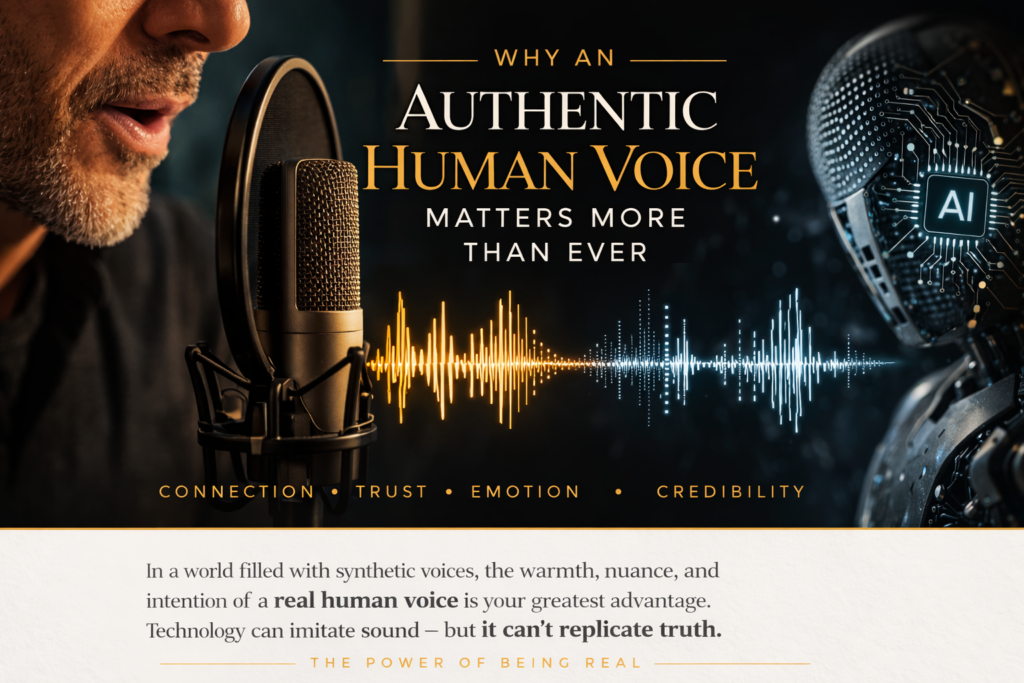
The Difference Between Sound and Communication
AI can produce sound.
Humans communicate.
A skilled voice actor does far more than read words on a page. We interpret tone, pacing, and emotional context. We understand what a message is trying to accomplish and shape the delivery to support that goal.
Two identical scripts can sound completely different depending on the intention behind them.
That intention is where authenticity lives.
And authenticity is what audiences respond to.
Authenticity Builds Trust
Whether it’s a commercial, a corporate training video, or a documentary narration, the goal is rarely just to convey information. The goal is to earn attention and belief.
People instinctively recognize when a voice feels genuine.
A real human voice carries subtle cues:
• breath
• emotion
• timing
• emphasis
• intention
These small variations create a sense of presence that synthetic voices struggle to reproduce.
When listeners feel that presence, they are far more likely to trust the message being delivered.
Why This Matters for Brands
Brands today compete for attention in a crowded digital environment. Audiences are exposed to more content than ever before, and their tolerance for anything that feels artificial is shrinking.
Authenticity has become one of the most valuable qualities a brand can convey.
A well-performed human voice helps communicate that authenticity. It signals that the message was crafted intentionally rather than generated automatically.
That distinction matters.
Because audiences may not consciously identify the difference, but they feel it immediately.
Technology Has Its Place
Artificial voice technology has legitimate uses. For internal tools, accessibility features, and rapid prototyping, AI voices can be incredibly useful.
But when the goal is to connect with an audience, to persuade, inspire, or educate, the human voice remains uniquely powerful.
Technology can imitate sound.
But it cannot replicate truth.
The Power of Being Real
In a world increasingly filled with synthetic voices, the warmth, nuance, and intention of a real human voice becomes even more valuable.
Authenticity stands out.
And sometimes the most advanced thing you can offer an audience… is simply being human.
Need Help?
If you’re looking for a voice that brings clarity, credibility, and connection to your project, feel free to reach out here or listen to my demos on the homepage.