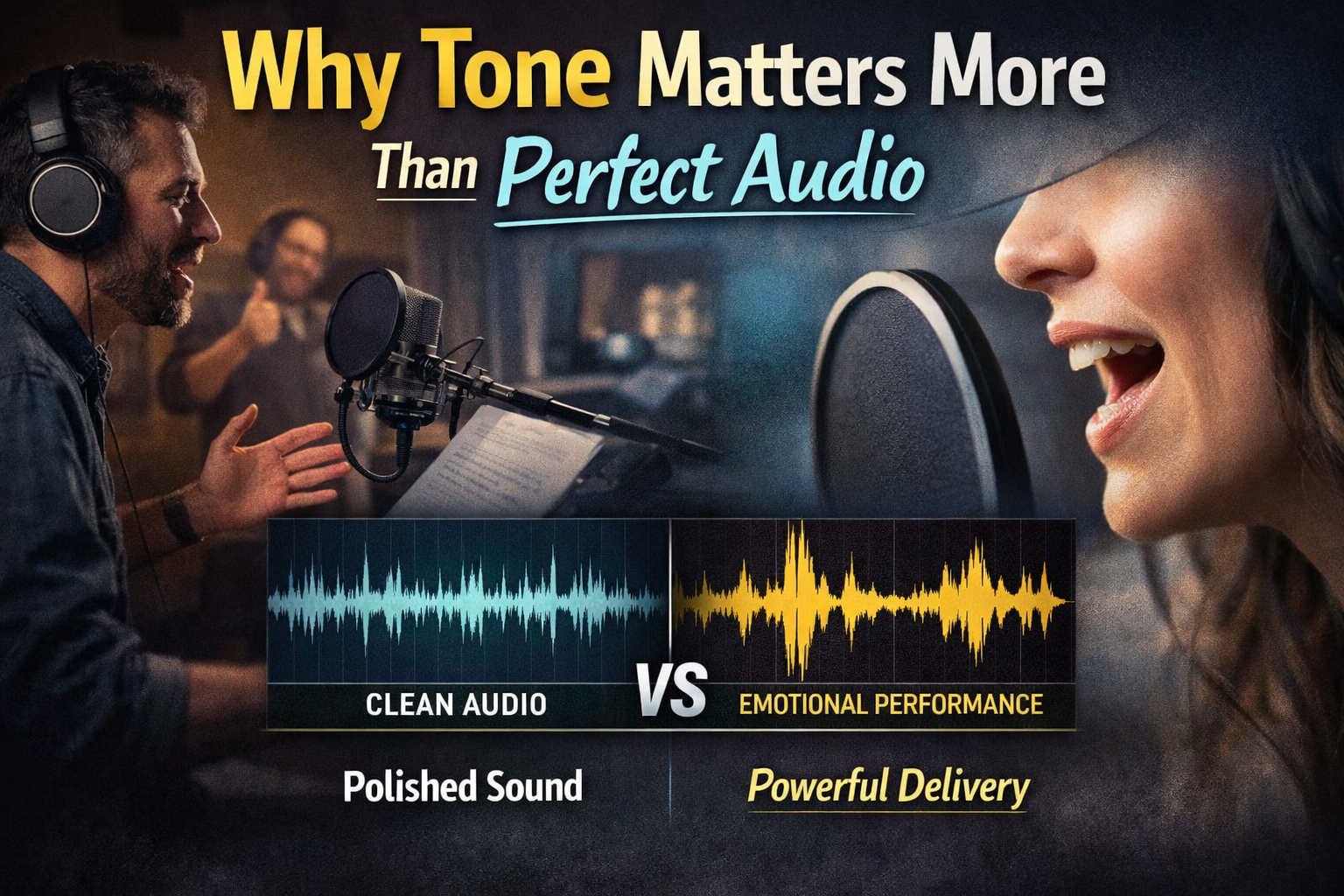
Why Tone Matters More Than Perfect Audio
I’m not an expert, just a student of the craft. This post reflects what I’m learning, refining, and working to apply as I grow in this field.
When people think about voice-over quality, the conversation usually starts with audio.
Noise floor. Mic choice. Room treatment. Compression. EQ.
And all of those do matter.
But here’s the truth that I’m learning along my journey:
Perfect audio won’t save the wrong tone.
But the right tone can carry imperfect audio surprisingly far.
What Clients Often Focus on First
In my research and training I’m learning that, especially in corporate or commercial work, it’s common for clients to zero in on the technical side:
- “Can we clean that up a bit?”
- “There’s a slight hiss there.”
- “Can we make it sound more polished?”
Those are valid concerns. Clean audio signals professionalism.
But sometimes, in focusing on those details, something more important gets overlooked:
Is the message actually landing?
Tone is What the Audience Feels
Audio quality is what people hear.
Tone is what they feel.
You can have:
- Perfectly balanced EQ
- Zero background noise
- Studio-grade production
…and still miss the mark completely if the tone doesn’t match the message.
A corporate training video that sounds too upbeat can feel insincere.
A commercial that sounds too flat can feel forgettable.
A narration that overreaches emotionally can feel forced.
Tone is what makes the message believable.
Why This Happens
Most clients aren’t audio experts and they don’t need to be.
Technical issues are easier to identify and talk about:
- “There’s noise”
- “It sounds off”
But tone is more abstract:
- “It doesn’t feel right”
- “Something’s missing”
So naturally, feedback tends to gravitate toward what’s easier to describe, even if it’s not the real issue.
Performance First, Polish Second
A strong, professional voiceover starts with performance.
That means:
- Understanding the intent of the script
- Knowing who you’re talking to
- Matching the emotional tone to the message
Once that’s right, audio quality enhances the performance.
But if the performance is off, no amount of polishing will fix it.
You can’t EQ your way into authenticity.
What the Best Projects Get Right
The strongest voiceover work tends to follow a simple order of priorities:
- Message clarity – What needs to be communicated?
- Tone alignment – How should it feel?
- Performance – Does it sound natural and intentional?
- Audio quality – Is it clean and usable?
Notice where audio sits.
It matters…but it’s not the foundation.
A Better Way to Think About It
Instead of asking:
“Does this sound clean?”
Start with:
“Does this feel right?”
Because that’s what your audience is responding to…whether they realize it or not.
Final Thought
Clean audio builds confidence.
But tone builds connection.
And connection is what makes a message stick.
If you’re looking for a voice that focuses on tone, clarity, and getting the message right, not just sounding polished, I’d love to connect.
You can check out my demos or reach out anytime.
If you need a voice that delivers clarity, consistency, and a message your audience understands, listen to my demos here.
Every project I take on is approached with one goal: make your message clear, natural, and easy for your audience to connect with.